Portuguese Water Dog Grooming: Swimming, Coats and Trims
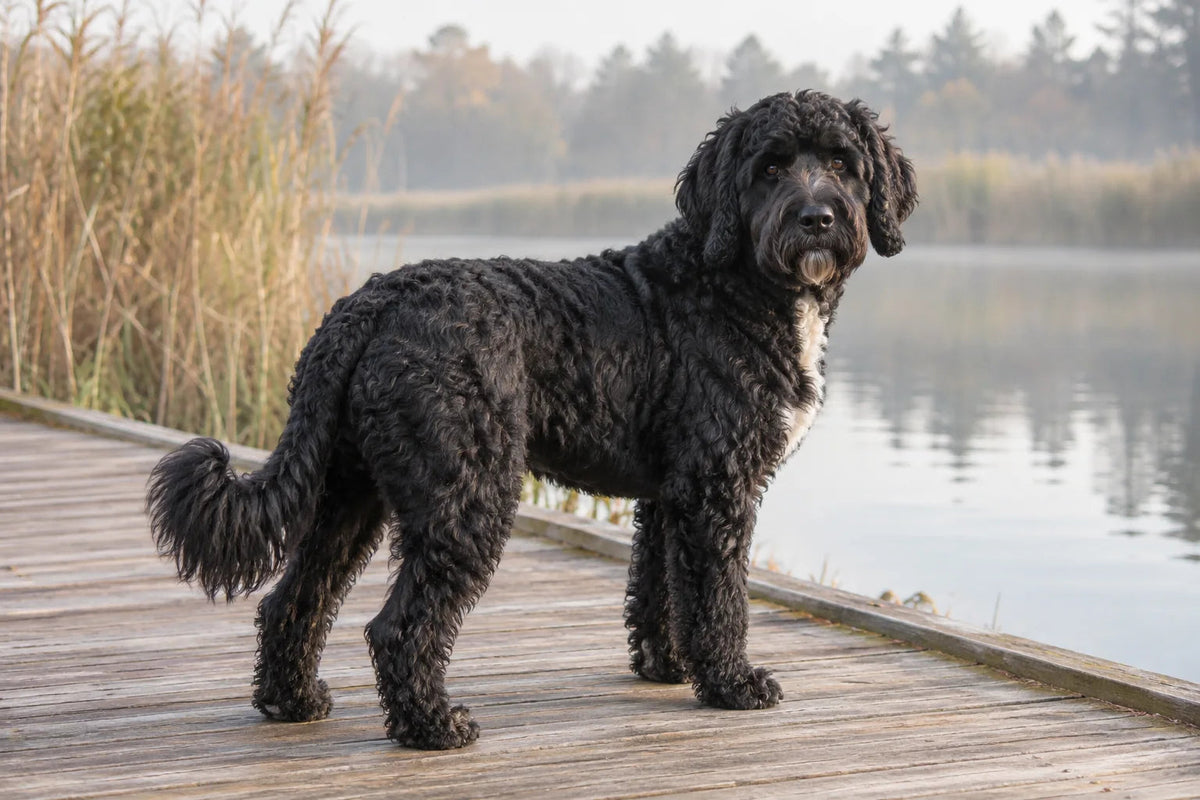
For a Portuguese Water Dog, a swim can be the start of the grooming job rather than the end of it. Water, debris and a dense growing coat make the after-activity routine just as important as the haircut.
You can keep the coat in a practical retriever trim without recreating an elaborate show finish. The useful aim is hair you can inspect, clean, dry and comb comfortably between appointments.
Water-friendly does not mean maintenance-free. Rinse away swimming residue, dry properly and check beneath the surface. A coat can look presentable while damp hair or a hidden tangle remains underneath.
Curly and wavy coats both need a plan
The AKC breed profile describes curly and wavy coat types and regular grooming needs. Do not confuse loose waves with an absence of tangles. Length, density, activity and the quality of your brushing all affect the work involved.
Ask your groomer to show you how the hair separates at the roots. That demonstration should cover the neck, behind the ears and beneath the front legs as well as the easy-to-reach back. A tool that glides across the surface is not necessarily clearing the full section.
A useful after-swimming sequence
The Portuguese Water Dog club’s grooming advice recommends rinsing the coat after swimming to remove salt, chlorine and debris. Build the time for that into the outing rather than leaving it until the dog is already resting in a damp coat.
- Look for loose debris. Check feet, legs, chest and underside for ordinary plant material or grit.
- Rinse with clean water. Work through the coat gently without rubbing it into knots. Protect the eyes and avoid directing water into the ears.
- Blot thoroughly. Press towels against wet hair rather than scrubbing it backwards and forwards.
- Dry the roots. Use comfortable moving airflow if tolerated, and check the denser or less exposed areas separately.
- Recheck the coat. Once dry, part the hair and check any areas that tend to tangle.
A full shampoo bath is a separate decision based on what the dog has picked up and its grooming needs. Follow dog shampoo instructions when washing; do not turn every rinse into a vigorous repeated shampooing.
Separate the hair in small layers
Settle your dog on a secure non-slip surface and begin in a comfortable area. Lift a narrow layer and brush with a suitable slicker or pin brush. Use light strokes, then follow with a metal comb to test the section you have cleared.
For a loose tangle, support the hair close to its base and work carefully from the ends. A dog conditioning product may help when used according to its label. A close, solid mat is different: do not force a comb through it or cut underneath with scissors. Arrange a groomer’s assessment.
The VUNRO combination comb provides different spacing for checking prepared sections. Start wider and only move finer when the hair passes freely. Keep track of where tangles return first so the next haircut can address those areas.
Retriever trim or lion trim?
Both are established styles, but you do not have to choose a lion trim to care for the breed correctly as a pet. A retriever-style trim keeps a more even, practical outline; a lion trim retains longer front coat with much shorter areas behind. The club’s guide explains the distinction and regular maintenance needed for each.
Discuss the amount of hair you can maintain, the frequency of swimming and how readily your dog accepts brushing. Agree on a specific finished length and follow-up interval. One owner’s convenient trim may still be too much hair for another household’s routine.
Do not copy a close show pattern on sensitive areas without training. Shape and skin safety are separate considerations, and experienced handling matters more than matching a photograph.
Before attempting a home body trim
Hair should be clean, fully dry and combable before clipping. Our coat preparation guide explains the checks. If an attachment catches, stop; more pressure is not the solution to retained tangles, damp roots or an incorrectly chosen setup.
The VUNRO D-Series clipper is an option for owners who have learned appropriate pet clipping. It uses D-Series blades. Choose the blade or compatible attachment for the intended finish with guidance, and keep precision face work, close mats and difficult areas with a professional.
What to check between haircuts
Inspect feet after outdoor activity, check nails and any dewclaws regularly, and gently clean and dry ordinary residue in the beard. Introduce nail tools gradually and ask for a demonstration if you are unsure how much to remove. Do not assume a dog’s activity maintains every nail.
Record which parts of the coat need the most work after a typical week. If the underside stays damp or the same knots reappear, review drying, retained length and appointment spacing. A successful water-dog grooming plan makes active days easier to follow with comfortable, manageable coat care.
Keep learning
More from the Blade Blog
Whippet Grooming: Gentle Coat Care and Comfortable Nails
Read the guide →
Chihuahua Grooming: Smooth Coats, Long Coats and Tiny Paws
Read the guide →