Lhasa Apso Grooming: Long Coats and Easier Pet Trims
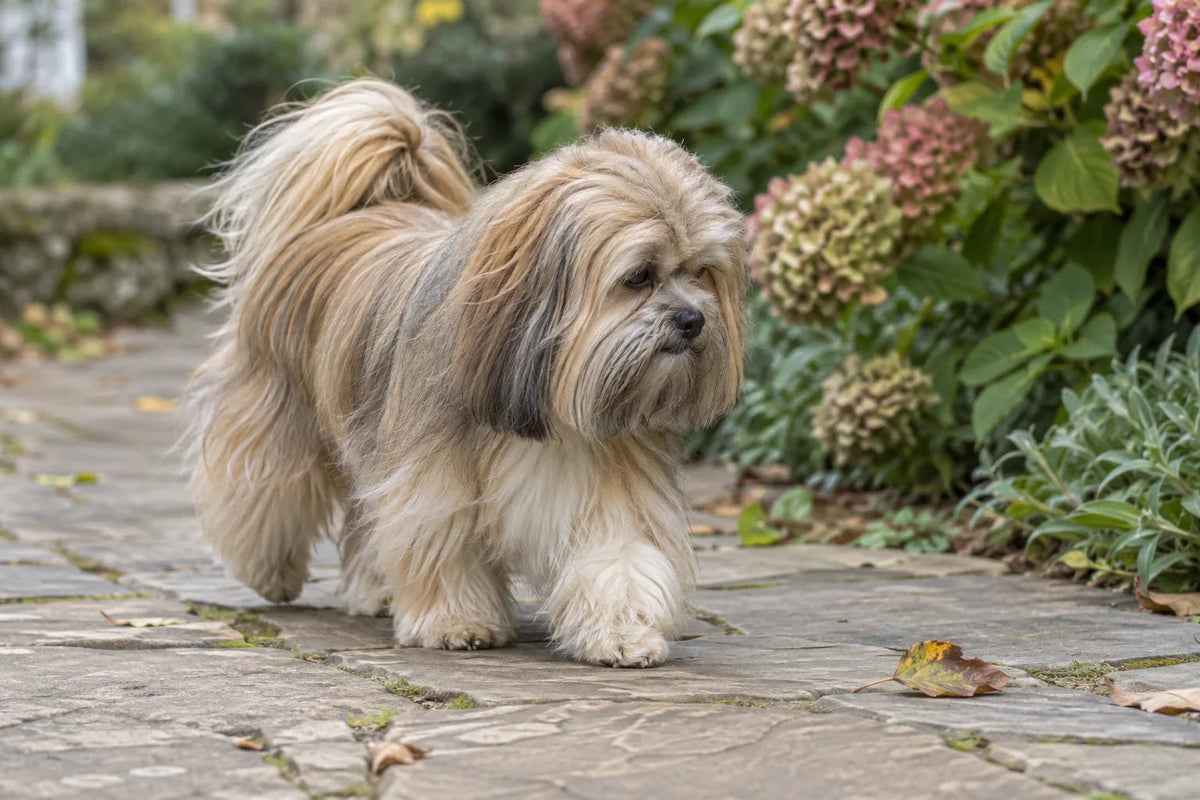
The long coat is only one way to keep a Lhasa Apso. Many pets wear a shorter trim that makes walks and home maintenance easier. The important choice is a length that remains comfortable all the way to the next appointment, not just one that looks impressive on grooming day.
A Lhasa can have substantial hair even in a practical cut. Learning to check underneath that hair will tell you much more than a quick brush over the back.
Shorter does not mean maintenance-free. Keep checking behind the ears, under harness straps and where the legs meet the body. These areas can become tangled while the visible outer coat still looks orderly.
Start with the length you can maintain
The AKC’s Lhasa Apso guidance recognises both long coats and shorter pet clips, with ongoing care required for either. A long coat needs careful separation and thorough drying. Shortening the coat reduces the amount of hair to manage, but it does not replace regular checks.
Before a haircut, consider three ordinary situations: how much debris your walks collect, how often the underside becomes damp and how much patient brushing your dog currently accepts. Those details help a groomer suggest a useful body length and manageable leg, ear and face furnishings.
Take a photograph of a style you like, but ask what it would involve between visits. Terms such as “puppy cut” do not specify a precise length. Agree on what will be left in each area and when to return before the hair becomes difficult to maintain.
Check the coat in layers
Start on a secure non-slip surface and choose an area your dog is comfortable having handled. Lift a narrow layer with your fingers. You are looking for hair that separates easily near its base, not simply a smooth surface.
- Gently part the hair and inspect a small section.
- Use a suitable pin brush or soft slicker with light strokes through that section.
- Support a loose tangle near the base and ease the ends apart without tugging the skin.
- Follow with a comb, moving on only when it passes comfortably.
- Check friction areas individually rather than assuming the back represents the whole dog.
A dog coat conditioning spray may help reduce snagging; follow its instructions rather than soaking the hair or mixing an improvised solution. The Lhasa breed club’s maintenance advice stresses establishing a regular grooming routine and not waiting until a dog is matted before booking professional care.
The VUNRO coarse-and-fine comb is useful for checking cleared sections. Start with wider spacing. If even the wide teeth catch, identify the tangle; do not use the fine side as a more forceful alternative.
Know when brushing is no longer the answer
A little loose tangle and a felted patch close to the skin are different problems. If hair forms a solid pad, the dog pulls away or you cannot separate it gently, stop and arrange a groomer’s assessment. Do not slide scissors under the mat, repeatedly scrape it with a brush or press a clipper attachment against it.
Tell the groomer which parts are difficult to handle and how long the problem has been present. Be open to a shorter result if preserving the length would mean prolonged uncomfortable work. For the following groom, use that information to change the interval or retained length.
Wash and dry without creating a new tangle
Prepare the coat before an ordinary bath by checking it and gently clearing loose tangles. Extensive matting needs assessment first. Have towels and dog shampoo ready, use a non-slip bath surface and keep the water lukewarm.
Work product through the hair in its natural direction instead of rubbing long lengths into a pile. Follow the label, rinse thoroughly and check areas that are easy to miss, including the underside and lower legs. Protect the eyes and avoid directing water into the ears.
Press the towel against wet hair to absorb water rather than scrubbing. If your dog tolerates a dryer, use comfortable airflow, keep it moving and work methodically. Check the roots as well as the ends. Hair that is left damp beneath a dry surface is not ready for clipping.
Use our coat preparation guide for the full sequence. The useful endpoint is clean, fully dry hair that a comb passes through comfortably.
Keep the face and feet practical
Check facial hair after eating and drinking. Wipe ordinary residue gently and dry damp ends. Long hair should not be left falling into the eyes; ask your groomer how to manage it safely or choose a shorter face style.
Look around the feet after walks for loose grit and plant material. Have hair that trails underneath the feet or becomes difficult to keep clean tidied by an experienced groomer. Do not attempt scissor work between moving toes. Check nails and any dewclaws separately from the hair; a fluffy outline can conceal their length.
Where home clipping can fit
If you have learned safe clipper handling, a practical body trim can be part of a Lhasa’s care plan. The VUNRO D-Series clipper uses D-Series blades; choose the finished length with appropriate guidance and work only on a prepared coat. A guard comb needs freely combable hair and is not a dematting tool.
Leave tight matting, precision face work and difficult areas to a professional. Between appointments, your most valuable contribution is often the quiet, consistent checking that lets your dog keep a comfortable coat without an uncomfortable rescue session.
Keep learning
More from the Blade Blog
Whippet Grooming: Gentle Coat Care and Comfortable Nails
Read the guide →
Chihuahua Grooming: Smooth Coats, Long Coats and Tiny Paws
Read the guide →