Separate a Dry Surface from a Dry Coat
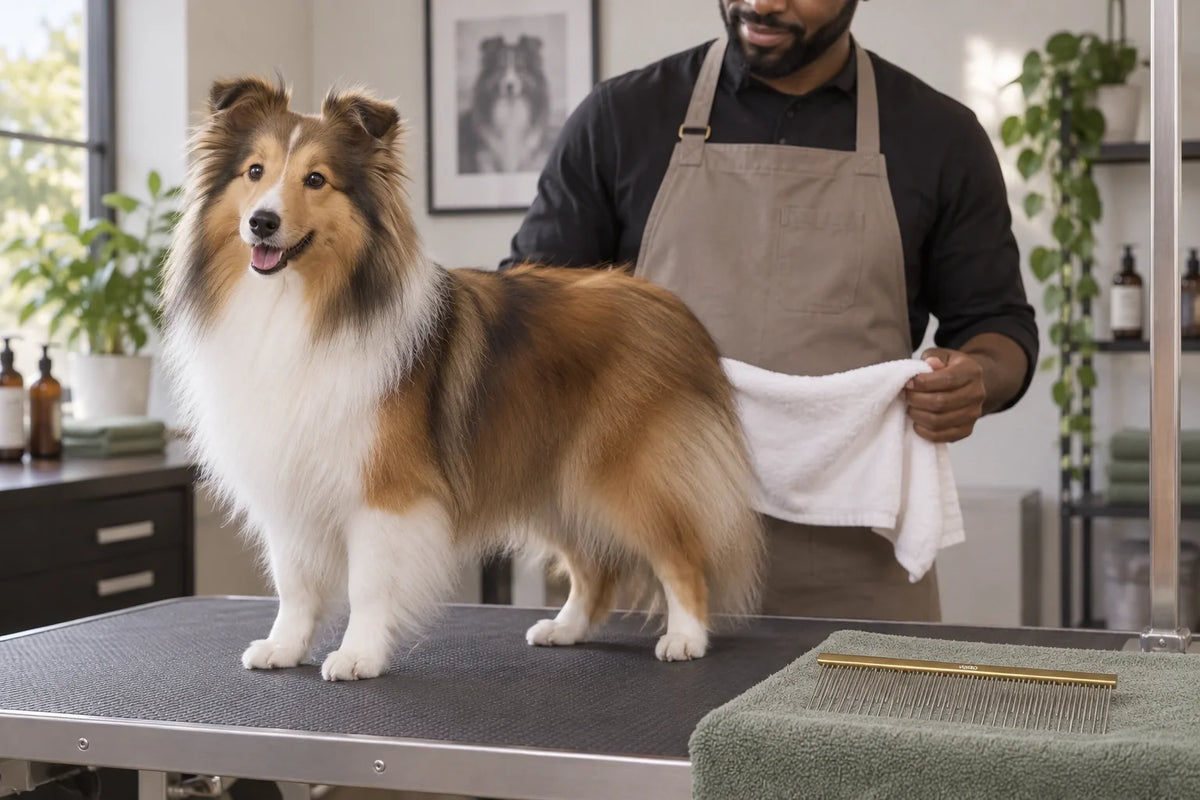
The body looks fluffy, the outer hair feels dry and the appointment is moving towards finishing. Then the comb reaches a denser area and the coat behaves differently. Before blaming the tool or changing the cutting length, check whether preparation is equally complete across the dog.
A surface impression is useful, but it is not a whole-coat assessment.
Separate three different questions
Is water still present in the coat? Has the hair been organised for the intended finish? Is the dog comfortable with the process so far? A “yes” to one does not answer the others.
For example, a coat may be dry but still arranged unevenly. A warm-feeling outer layer does not establish that a denser region is ready. A dog standing quietly still needs active observation.
Use a regional check
Build a repeatable route through the areas appropriate to that dog, including denser or overlapping furnishings that are easy to miss. Keep handling gentle and work within the dog's comfortable range.
Examine manageable sections with a clear view, rather than repeatedly raking through the whole coat. If an area needs further preparation, address that area with an appropriate method while monitoring the dog. Avoid subjecting already finished regions to extra heat and airflow simply because one patch is incomplete.
Lantra's drying standard combines selecting suitable methods with checking the coat and monitoring the dog's response to temperature and air velocity. Completion is a judgement about the work and the animal, not just elapsed dryer time. Read the drying standard.
Know what a comb can tell you
The VUNRO 6-inch Brass Double Skip Pin Comb has a repeating long-and-short pin arrangement for suitable detangling and loose-coat work. Use it to organise manageable sections and assess resistance after appropriate preparation.
It is not a moisture meter. A snag does not prove the coat is wet; tangles, section size and local density can also affect passage. Stop at resistance and investigate rather than pulling harder to obtain a “pass”.
For a finishing check with two more conventional spacings, compare the 8-inch LUX Coarse and Fine Straight Comb. Choose according to access and coat section, rather than assuming one comb must do every preparation job.
Do not confuse coat dryness with skin hydration
Canine skin research has measured differences in hydration between body sites using electrical-capacitance methods. Those measurements concern skin water dynamics, not how much bath water remains in the coat. A salon touch check cannot substitute for that instrument or diagnose a skin condition. Read the skin-hydration research.
Likewise, normal skin should not be treated as something to dry out completely. Your task is appropriate coat preparation while protecting comfort and skin condition.
Recheck after the coat settles
Before final shaping, allow a normal pause in the workflow and reassess the intended outline. Notice whether a region has collapsed, clumped or changed lay since the dryer was removed. Use those observations to revisit preparation before taking off more length.
Do not set a universal extra drying time. Coat type, density, equipment, room conditions and the dog's tolerance all affect the decision. If the dog shows distress or cannot continue comfortably, stop and agree a revised plan.
Make the handover useful
If another groomer takes over for finishing, identify any area that needed extra attention and what was done. “Check the left chest furnishings before setting the line” is more actionable than “dry now”.
Read Coat Humidity Is Not the Same as Room Humidity for the research behind regional differences, and Guard-Comb Streaks: Read the Direction Before Changing the Length before trying to solve a preparation issue with a shorter cut.
Keep learning
More from the Blade Blog

Check the Outline in Motion Before Making Another Cut
Read the guide →
Use the Comb to Set a Scissor Line Without Stretching the Coat
Read the guide →